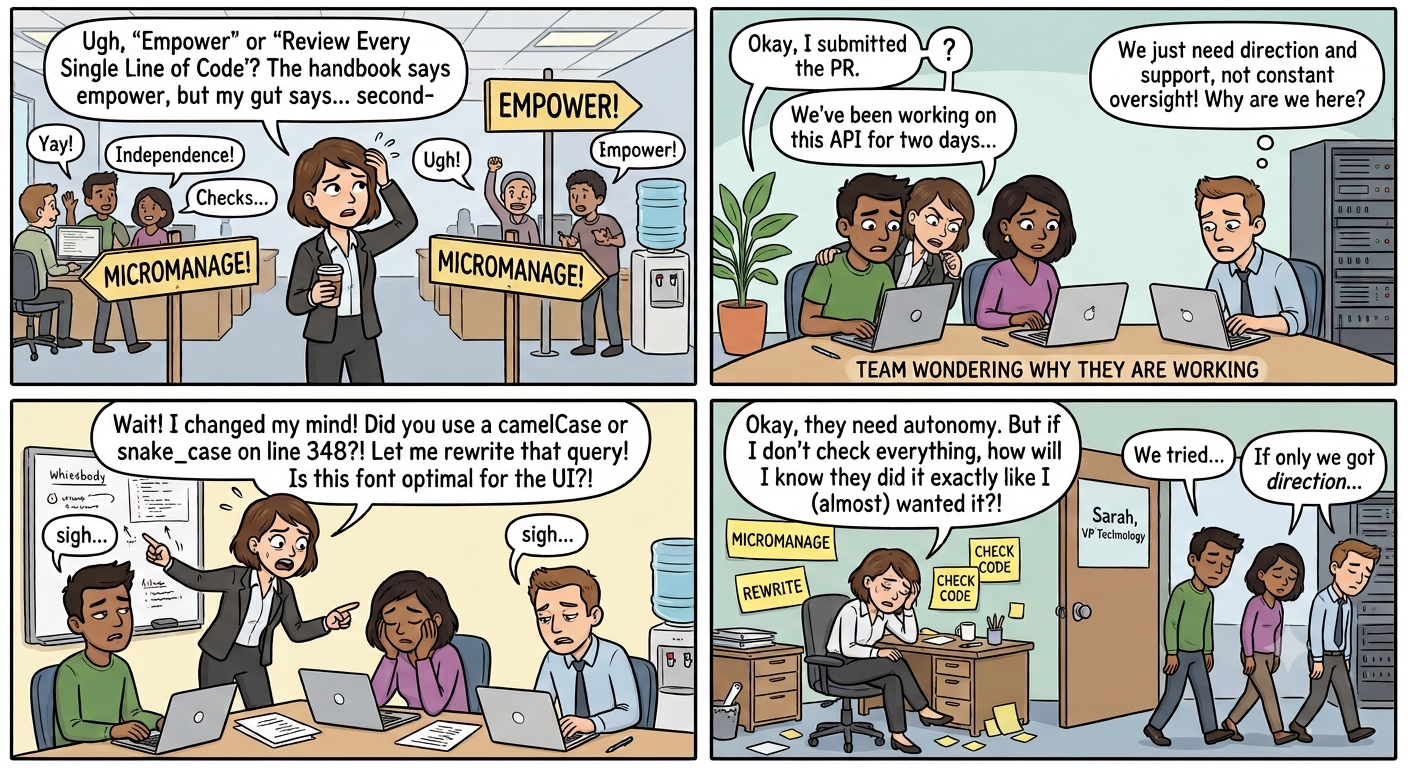
Empowerment - Micro Manager Executive
Life of AI Generation Employees 12
Fictitious Corporate World Satire
Welcome to corporate life: a cynical ecosystem of showboating and structural callousness where adults host meetings to plan meetings and weaponize "per my last email" like a passive-aggressive knife fight. It’s a farce of zero integrity where we all just smile on mute—because the only thing worse than the chaos is accidentally unmuting your soul-crushing sigh.
Life of AI Generation Employees 12
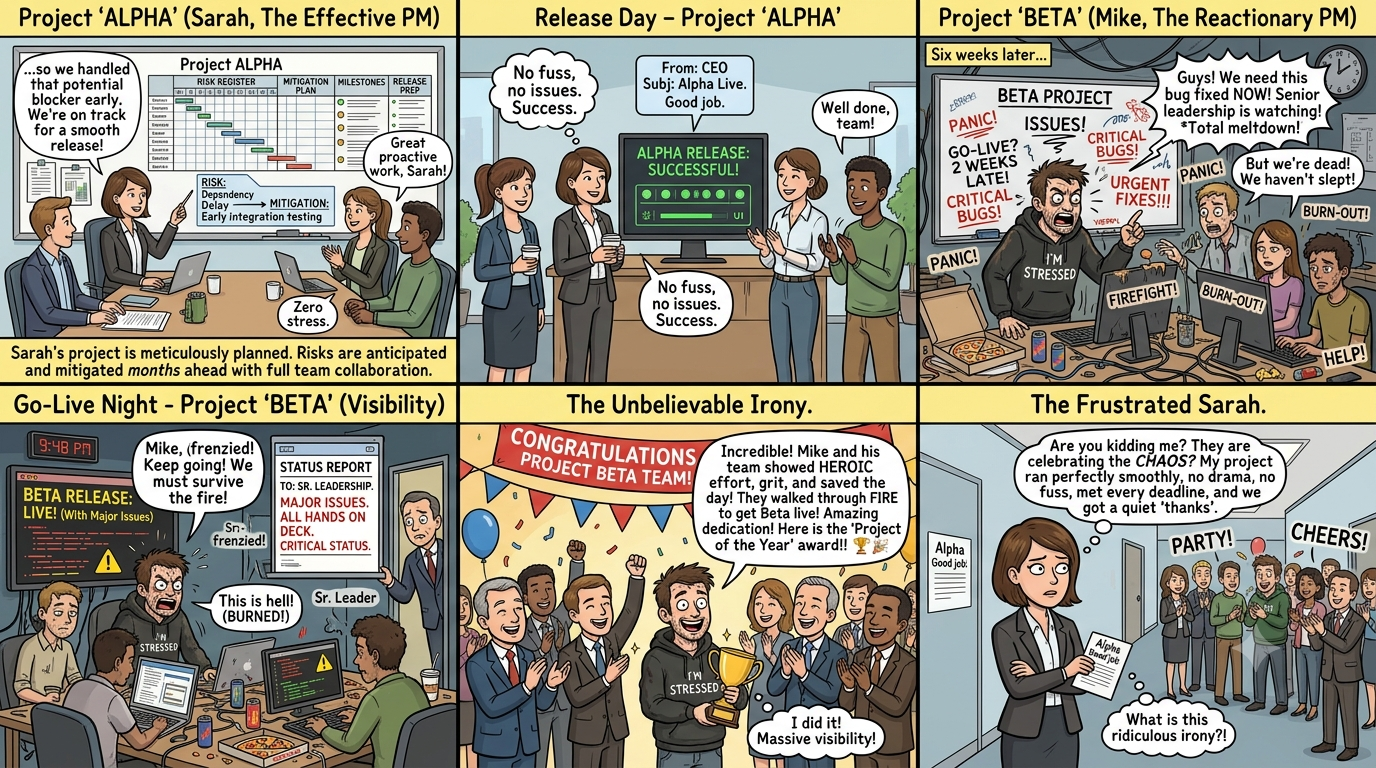
Life of AI Generation Employees 11
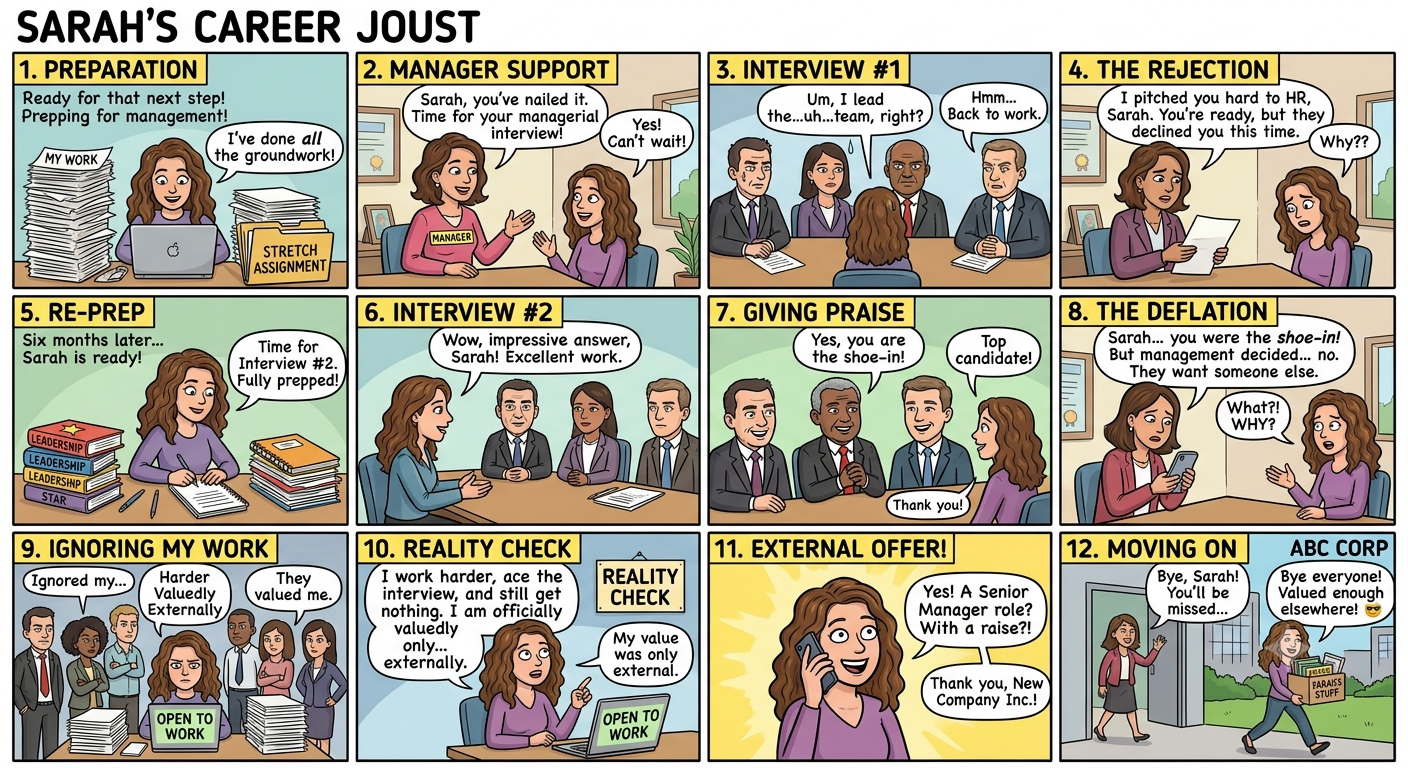
Life of AI Generation Employees 10
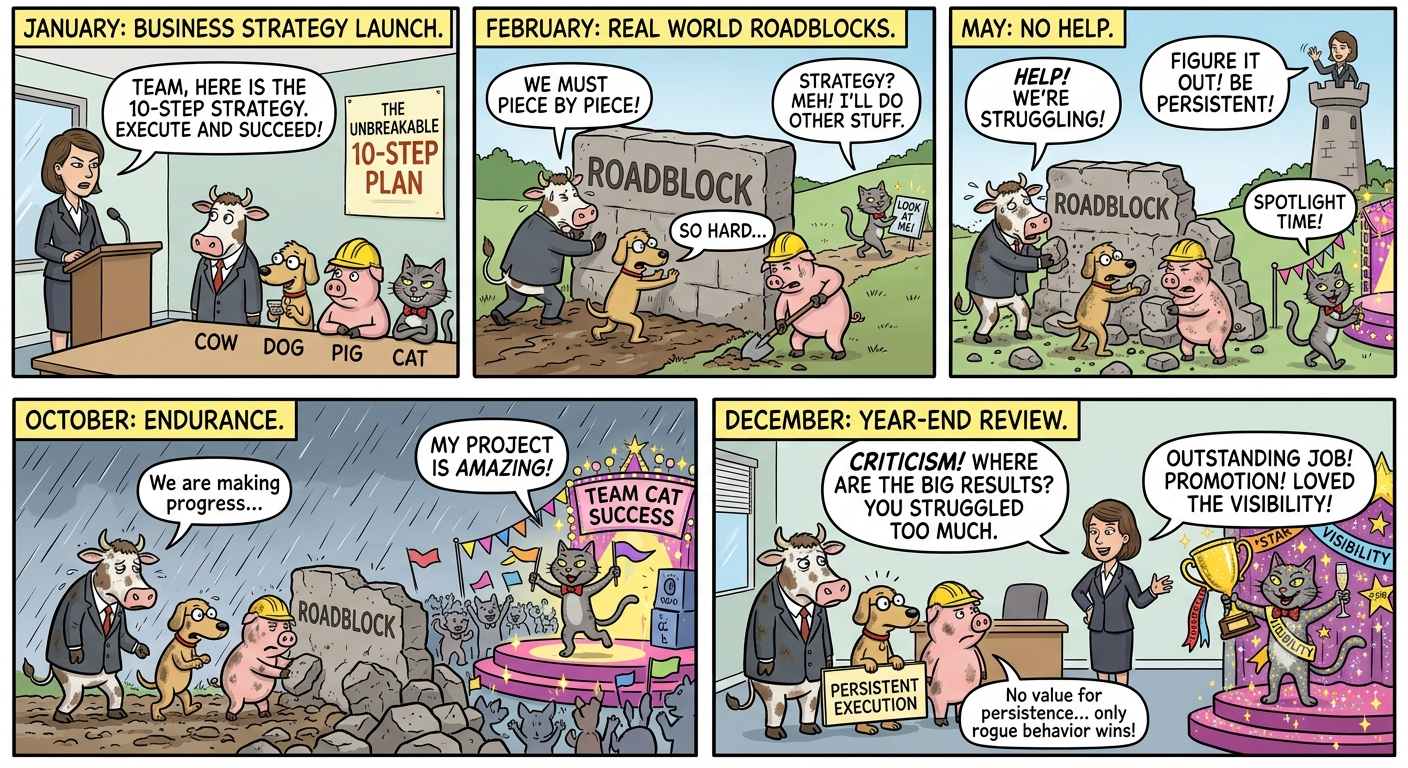
Life of a Junior Executive 4
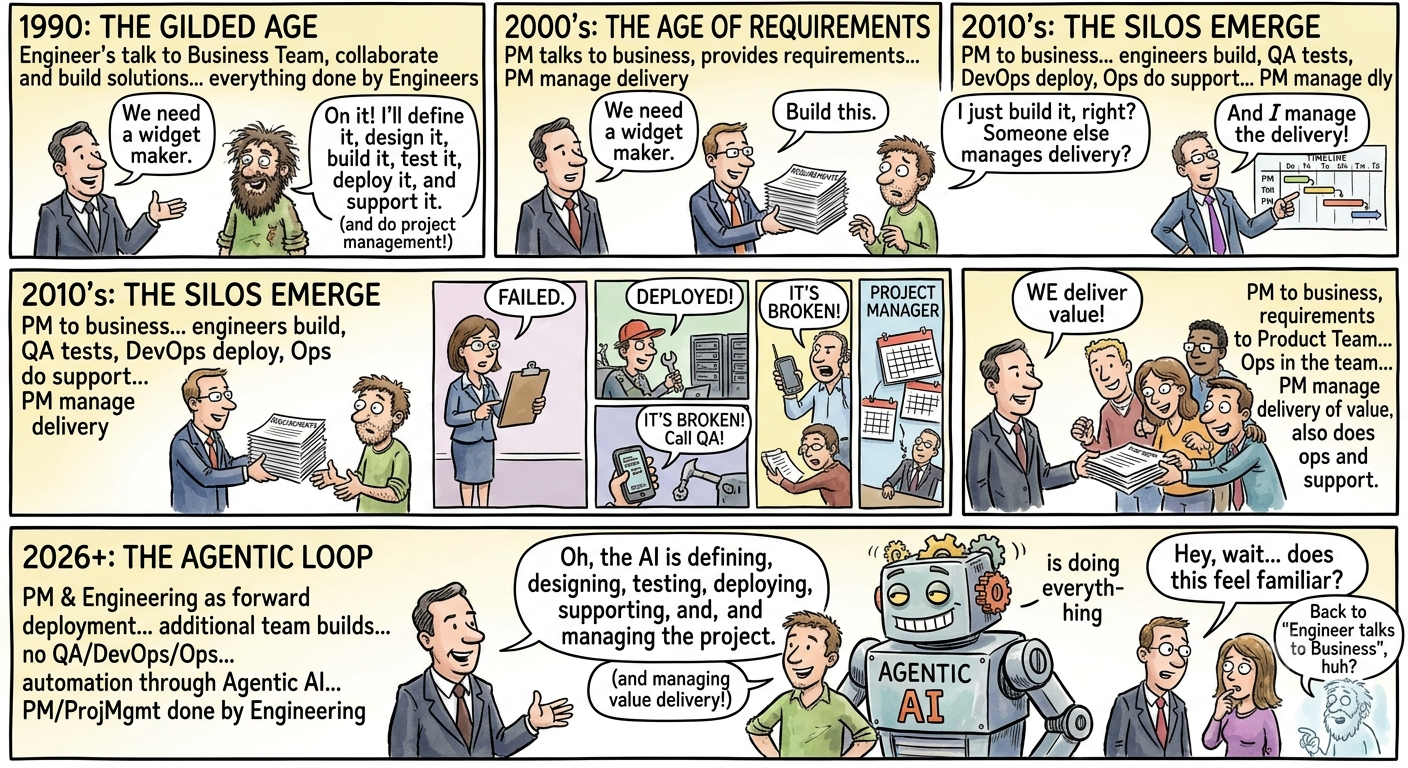
Life of AI Generation Employees 9
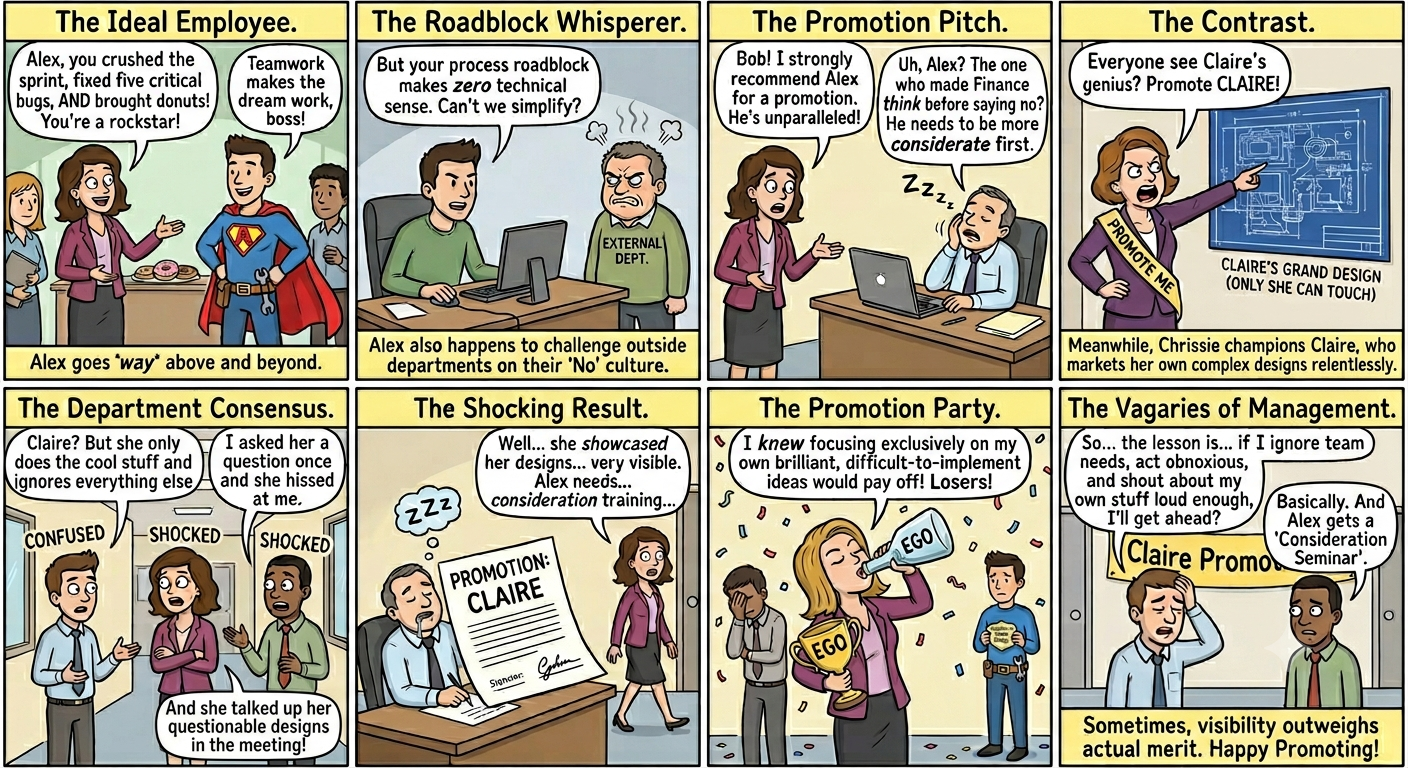
Life of AI Generation Employees 8
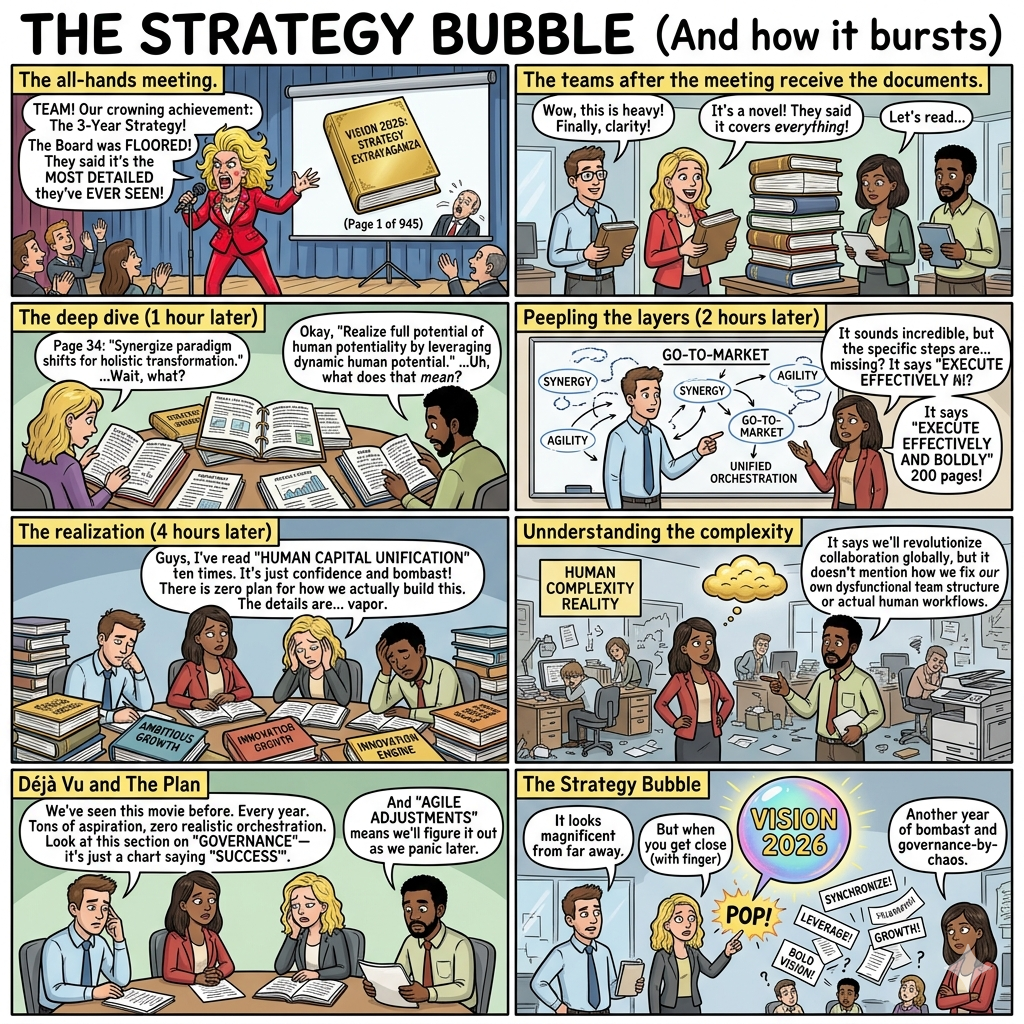
Life of AI Generation Employees 7
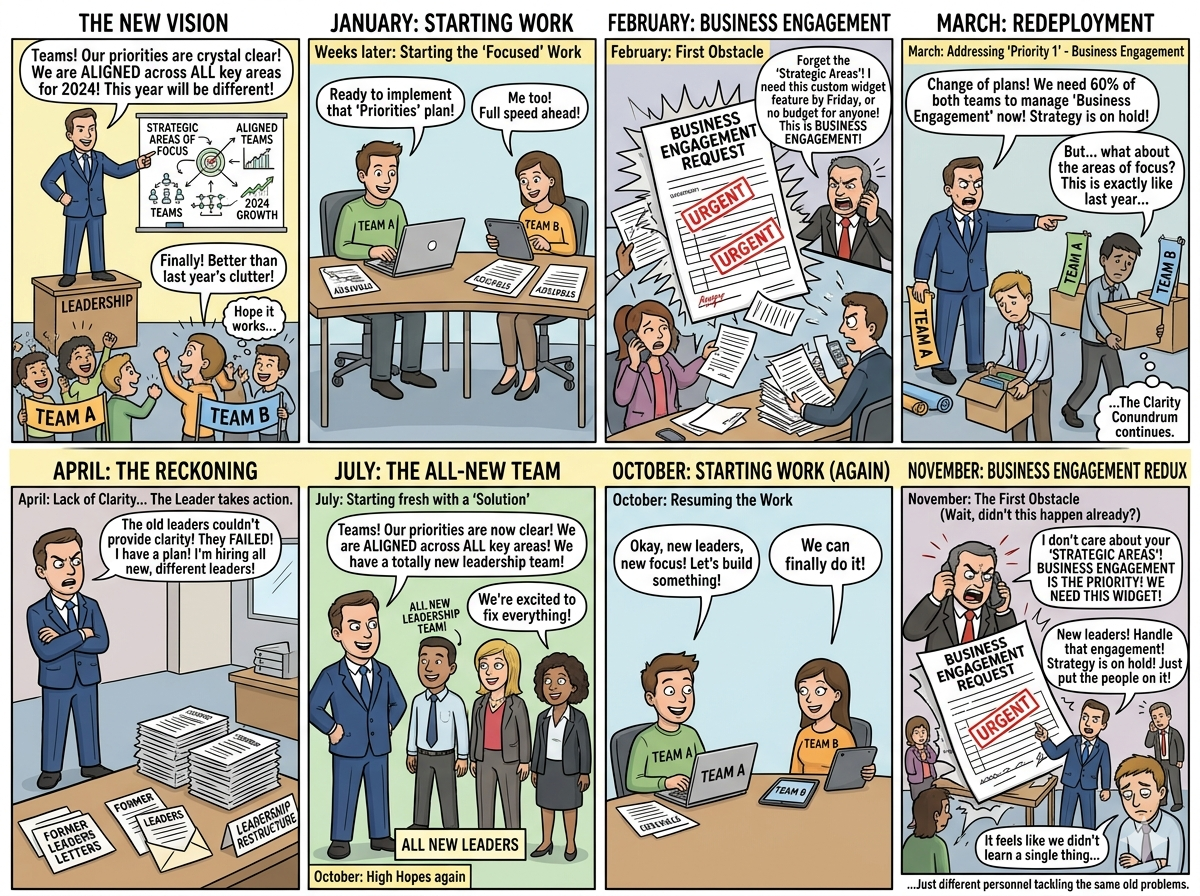
Life of AI Generation Employees 6
Life of AI Generation Employees 5
Life of AI Generation Employees 4
Life of AI Generation Employees 3
Life of AI Generation Employees 2
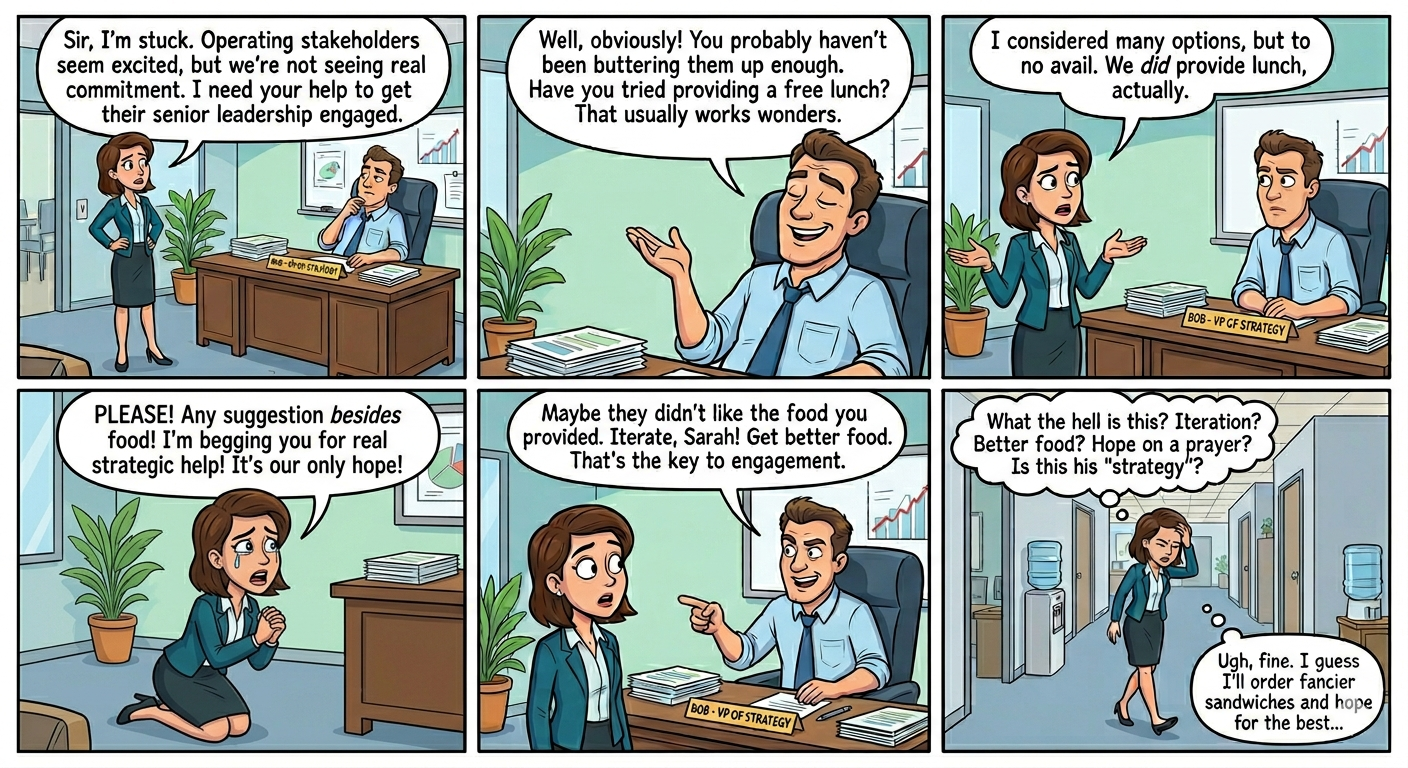
Life of AI Generation Employees 1
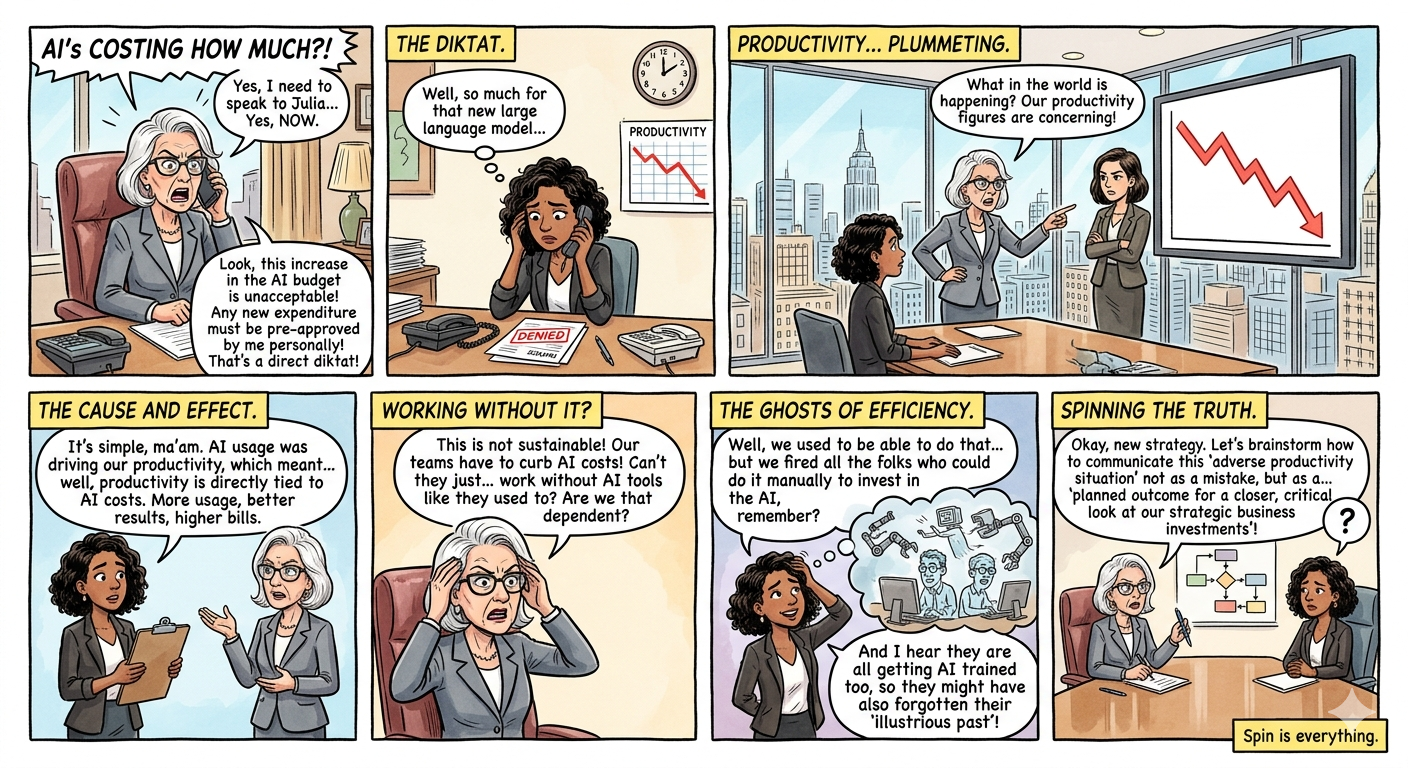
Life of an AI Executive 2
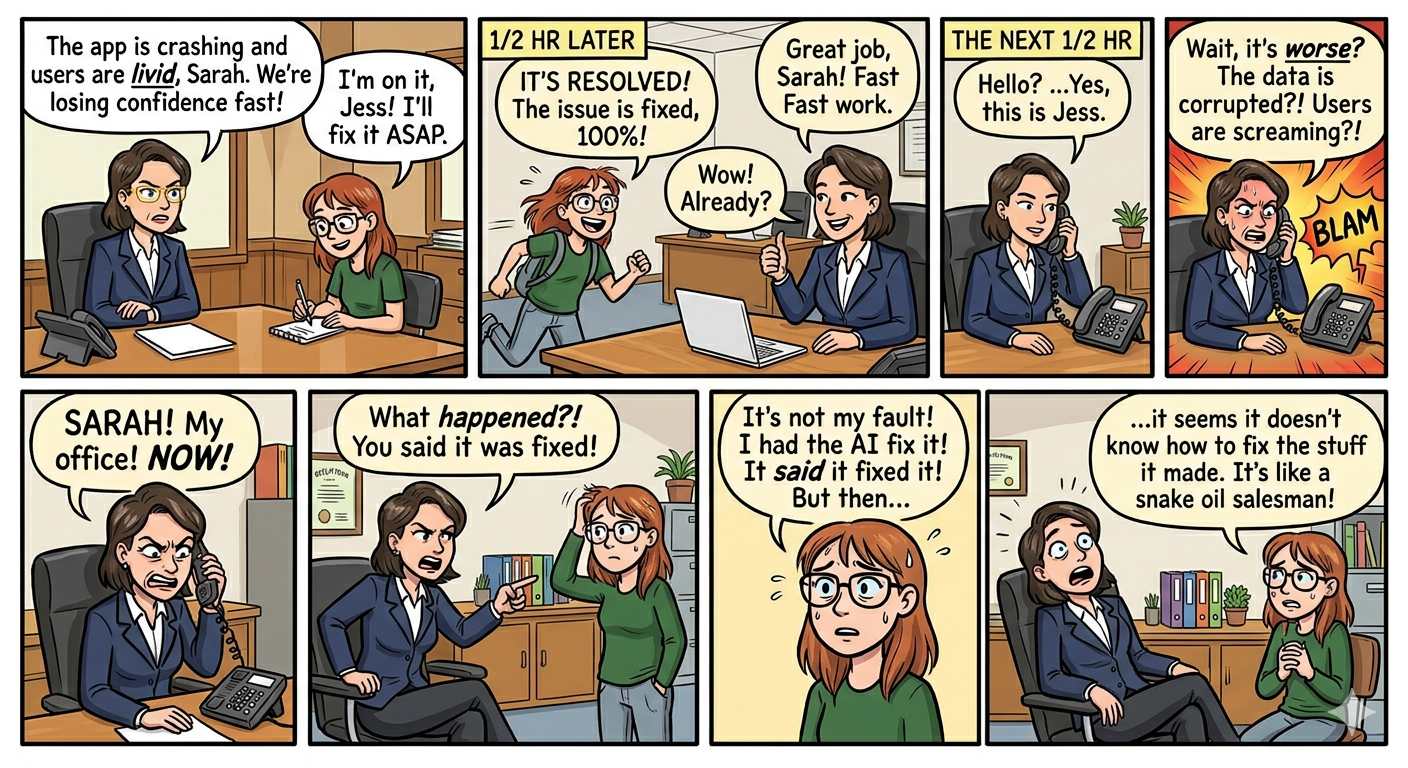
Life of an AI Executive 1
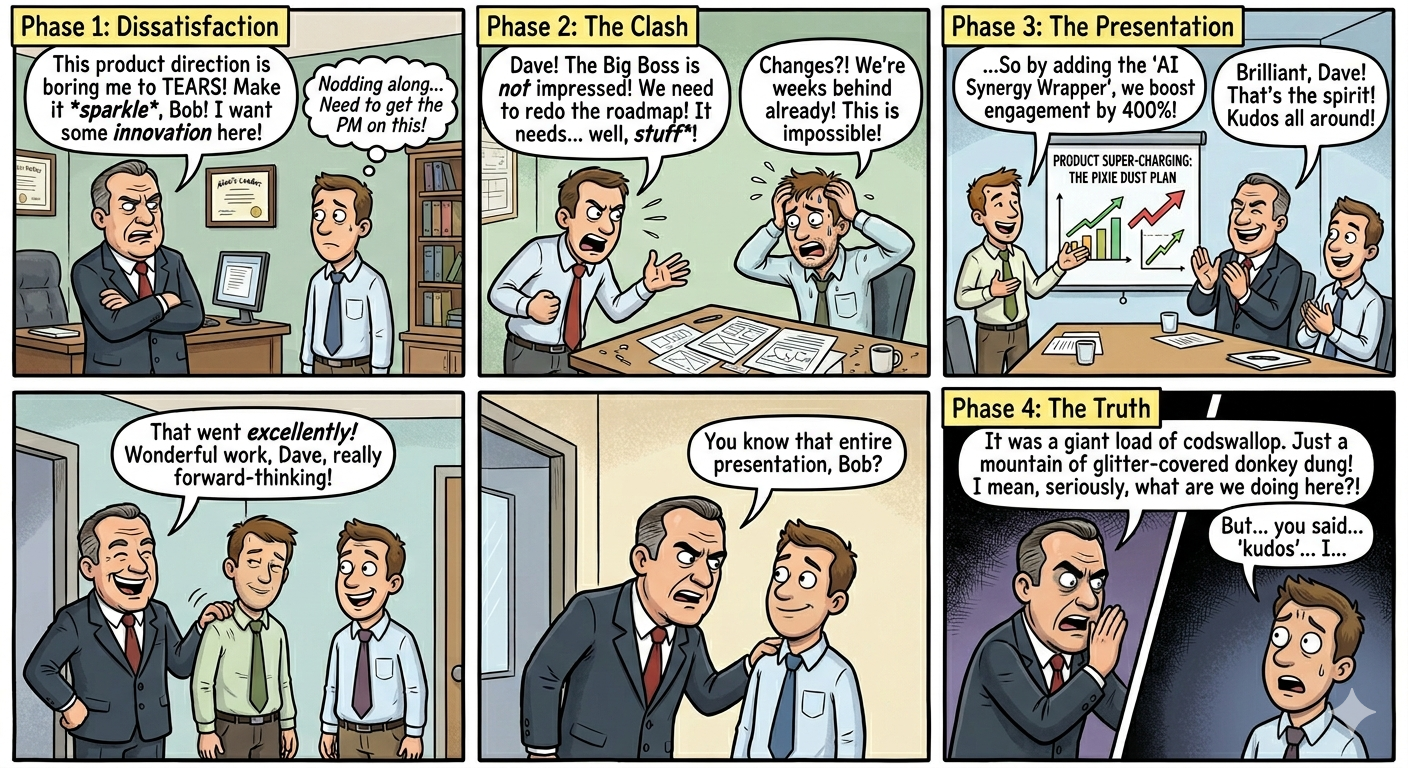
Life of a Junior Executive 3
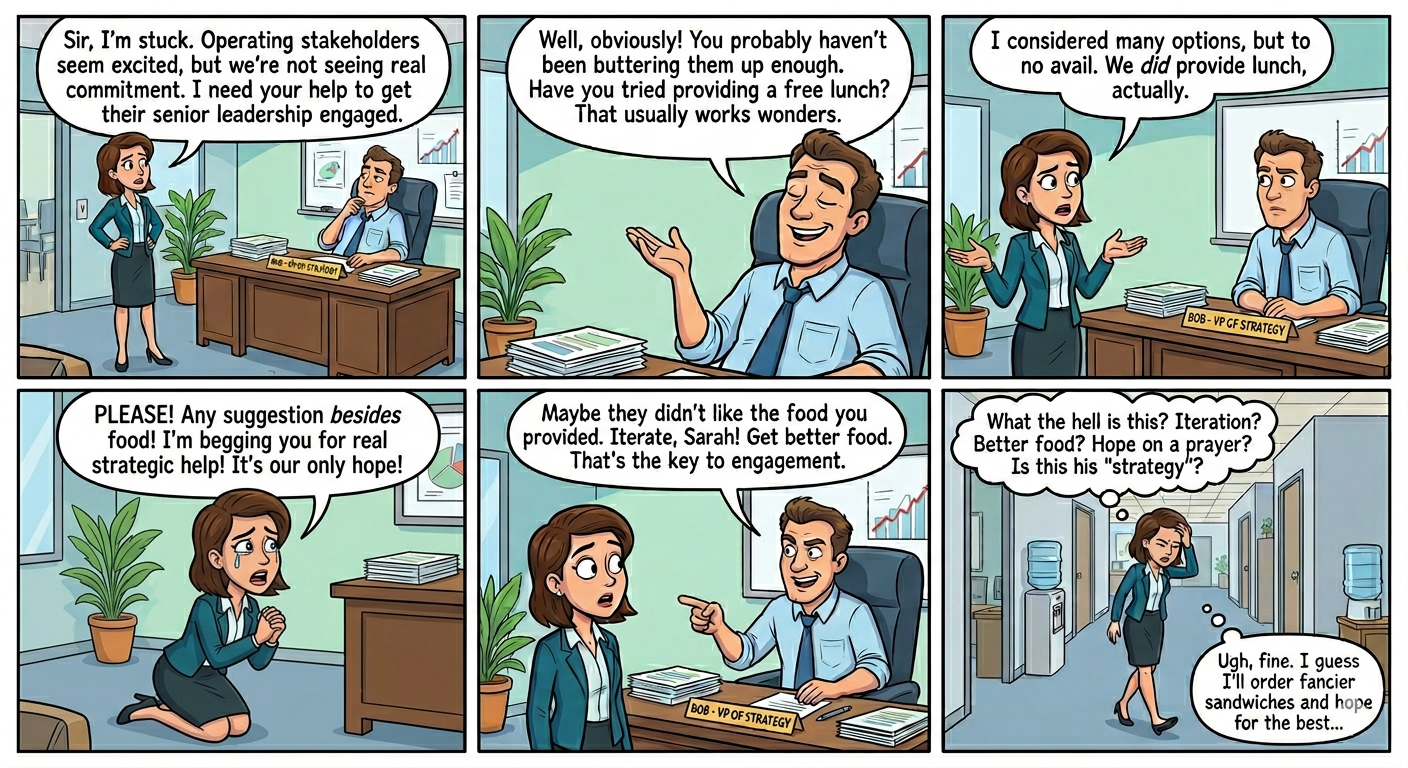
Life of Junior Executive 2
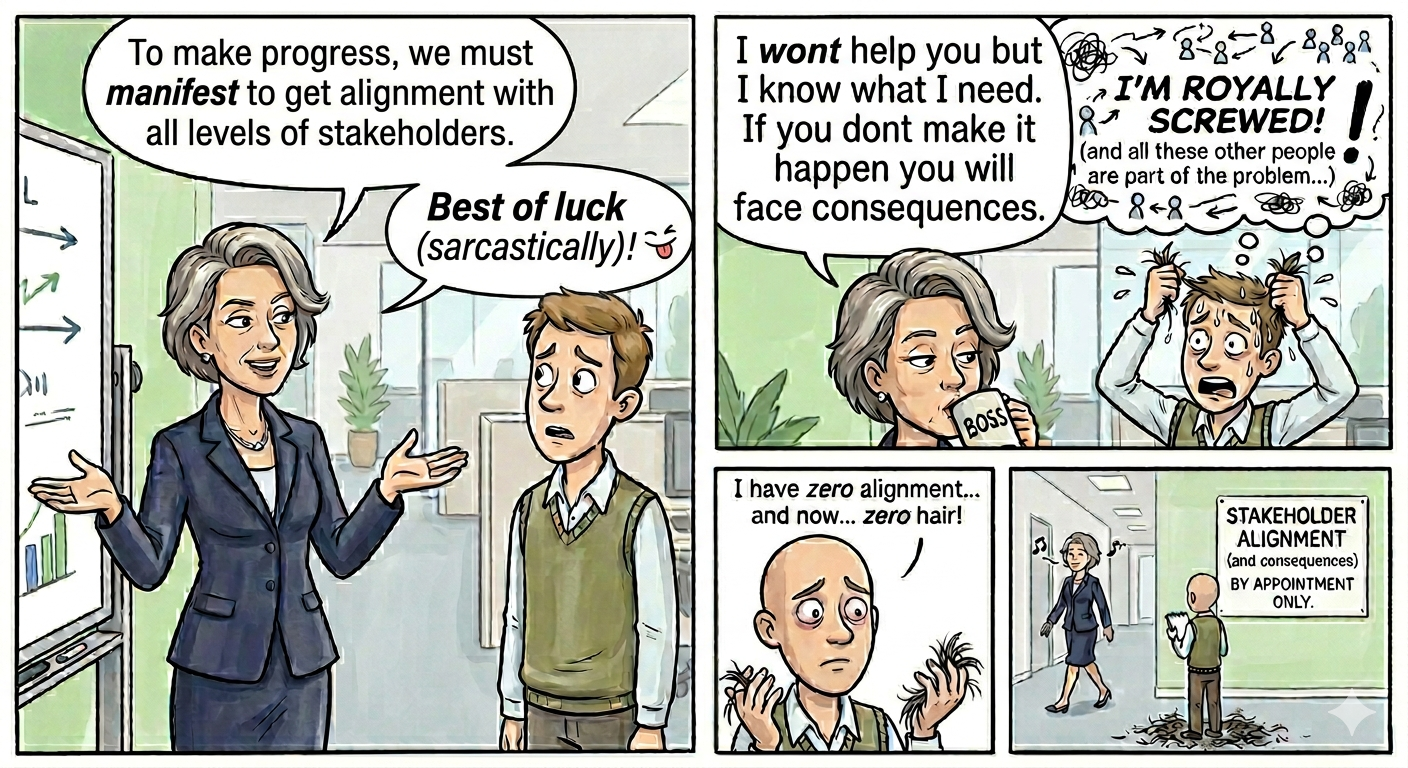
Life of a Junior Executive 1
Fictitious Civilian Life Satire
Welcome to civilian life, where errands multiply, group chats become municipal governments, and everyone is one forgotten password away from emotional bankruptcy. It’s a familiar little circus of appointments, parking signs, suspiciously urgent coupons, and neighbors who somehow know exactly when your recycling bin moved three inches.

Civilian Life 15

Civilian Life 14

Civilian Life 13

Civilian Life 12
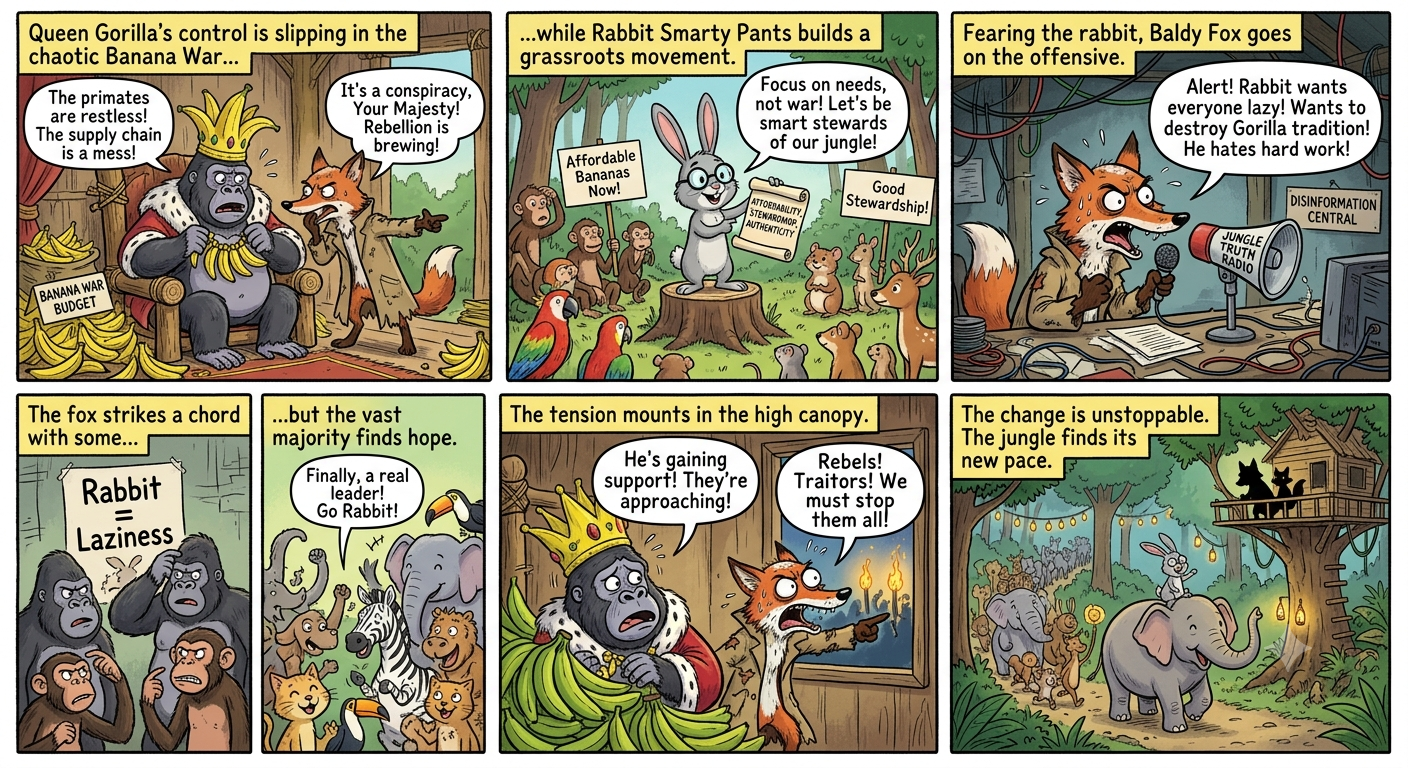
Civilian Life 11
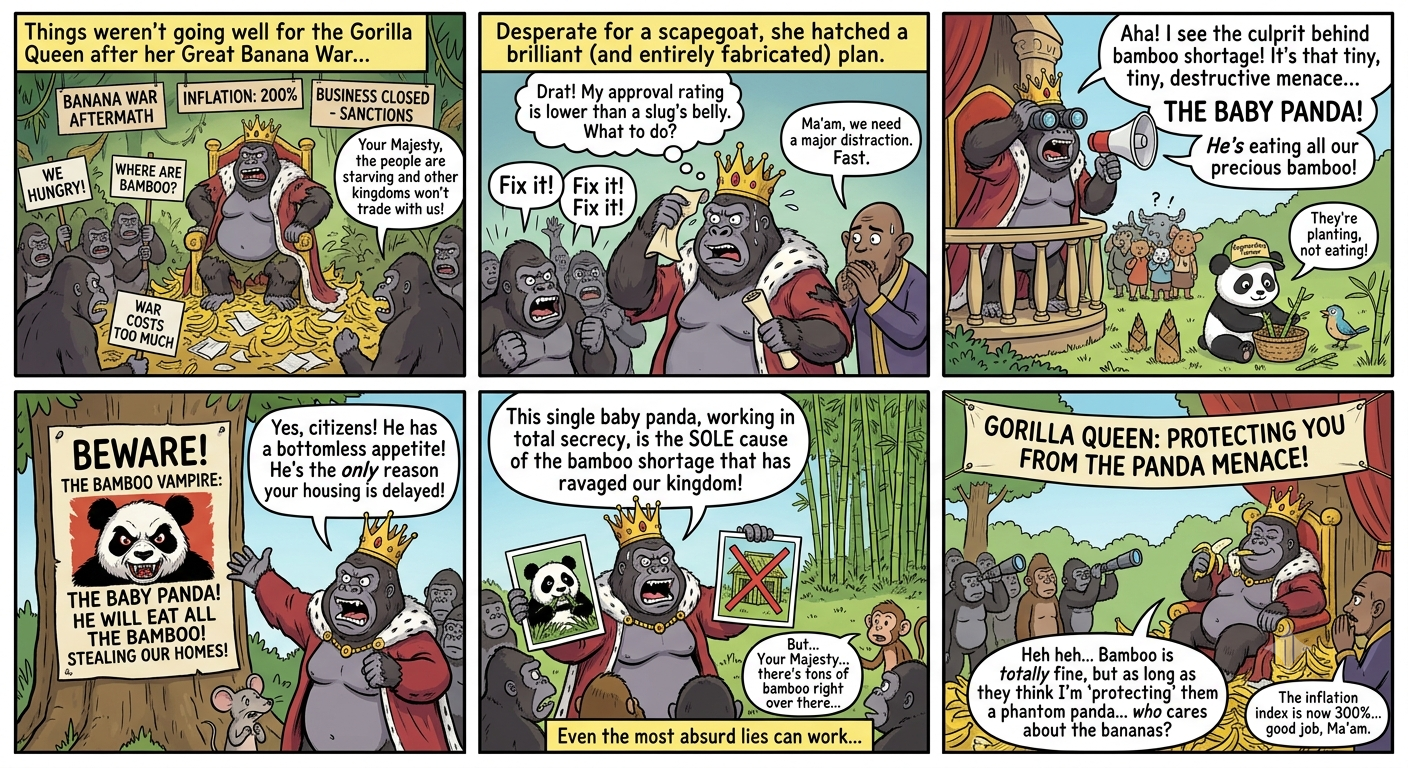
Civilian Life 10
Civilian Life 9
Civilian Life 8
Civilian Life 7

Civilian Life 6
Civilian Life 5
Civilian Life 4
Civilian Life 3
Civilian Life 2
Civilian Life 1
Fictitious Relationship Chronicles
Welcome to the soft infrastructure of closeness: the drafts we never send, the clocks that refuse to sync, and the ordinary proofs of care that never make the highlight reel. These are reflective notes—sometimes funny, sometimes pointed—about how people hold, miss, and remake each other.
When we stand on life's peaks, we often mistake them for the edge of the world.
From the summit, we see the cliffs below and imagine only decline ahead. Success, youth, health, love, accomplishment, certainty; whatever form the peak takes, we become convinced that everything beyond it is loss.
Yet the mountain tells only part of the story.
The descent reveals valleys hidden from the summit's view: streams, forests, wildflowers, unexpected companions, and quieter forms of beauty. What once appeared to be falling becomes wandering. What felt like loss becomes discovery.
Relationship Chronicles 8
There is a peculiar bargain many of us make with life.
We postpone joy until the promotion arrives. We delay rest until the crisis passes. We defer contentment until the savings account grows, the relationship stabilizes, the diagnosis clears, or the plan finally works.
The future becomes a creditor, demanding payment from the present.
Yet tomorrow never arrives in the form we imagined. When one uncertainty disappears, another takes its place. The life we were waiting to begin quietly becomes the life we are already living.
Relationship Chronicles 7
Most complex problems are frightening from a distance.
A career crisis. A failing relationship. A business transformation. A health challenge. A life that feels too heavy to carry.
From afar, they appear as mountains. We stare at their size and become overwhelmed before taking a single step.
Yet every mountain is traversed one foothold at a time.
Relationship Chronicles 6
One person wakes to an empty calendar and feels crushed by an abundance of hours. Another wakes to a schedule so crowded that every minute has a price. Both secretly believe the other possesses what they lack.
Yet time is rarely what it appears to be.
The unemployed worker fills endless days with learning, creating, searching, and striving to make time feel valuable. The overworked professional spends money to reclaim fragments of freedom from a calendar that never stops advancing. Between them lies a shared misunderstanding: time is not simply something we have or lack. Its value shifts with uncertainty, meaning, purpose, and attention.
Relationship Chronicles 5
You leave home and discover that belonging does not travel with you.
In a city full of millions, you begin assembling a life from fragments: friends who become siblings, mentors who become parents, strangers who become witnesses. Yet every connection is complicated by uncertainty. You are still becoming yourself. They are becoming themselves. Everyone is carrying unfinished versions of who they are.
Relationship Chronicles 4
You wrote the perfect message three times, then deleted it because the silence felt more honest than another performance of clarity. Sometimes love is not the paragraph—it is the decision not to audition.
Relationship Chronicles 3
One of you lives in now; the other lives in soon. You keep trying to meet in the hallway between urgency and patience, learning that timing is its own tenderness—and its own friction.
Relationship Chronicles 2
We curate quiet mercies for those we love—softening their edges, anticipating their shadows, keeping a tender ledger of their needs. Yet when we look inward, the pen drops. We become the only soul in the room we forget to care for.
Relationship Chronicles 1
There is a peculiar illusion that accompanies every peak.
It arrives silently.
A promotion.
A successful business.
A happy relationship.
Good health.
A period of confidence.
A season when everything seems to be moving in the right direction.
From the summit, the world appears clear.
You have climbed.
You have struggled.
You have arrived.
Yet standing at the top produces an unexpected anxiety.
You begin looking downward.
You see steep cliffs falling away below you.
The valley appears distant and unfamiliar.
And a troubling thought arrives:
What if it is all downhill from here?
Ironically, those occupying life's peaks rarely recognize them as peaks.
Success feels normal while we are living inside it.
Health feels ordinary until it changes.
Youth feels permanent until it isn't.
We notice the mountain most clearly after we have descended.
Only later do we realize:
That was a summit.
I was standing on it.
And I did not fully see it.
Human beings have a complicated relationship with downward movement.
We tend to associate ascent with progress.
Descent with loss.
Up means improvement.
Down means failure.
Every chart points upward.
Every ambition reaches higher.
Every success story celebrates the climb.
Very few celebrate the descent.
And yet every mountain guarantees one.
To remain forever at a summit is impossible.
Life does not operate as a staircase climbing endlessly toward the sky.
It moves more like a landscape.
Ridges.
Plateaus.
Forests.
Valleys.
Streams.
Peaks.
The mistake is believing that only the peaks matter.
The landscape has other ideas.
The summit offers a magnificent view.
What it does not offer is perspective.
From the top, the valley often appears empty.
Distant.
Less significant.
A place you hope never to visit.
But the summit cannot see what lies beneath the trees.
It cannot see the stream winding through the meadow.
It cannot see wildflowers hidden among tall grass.
It cannot see the shaded paths that offer rest.
It cannot see conversations waiting around campfires.
It cannot see the unexpected friendships.
It cannot see the slower rhythms.
It cannot see the life occurring below.
The mountain reveals only a portion of the truth.
The valley reveals another.
Many of life's deepest discoveries are invisible from success.
They require proximity rather than elevation.
They require walking rather than climbing.
When people enter a valley, they often assume something has gone wrong.
A career slows.
A relationship ends.
Children leave home.
Health changes.
Plans unravel.
The terrain feels unfamiliar.
The sky appears farther away.
The summit disappears behind you.
Naturally, the first instinct is to climb again.
To escape.
To return.
To recover what was lost.
Yet valleys possess gifts unavailable elsewhere.
The soil is richer there.
The water gathers there.
Things grow there.
The valley is where roots deepen.
The summit provides visibility.
The valley provides nourishment.
Neither can replace the other.
There are lessons elevation cannot teach.
Humility.
Patience.
Resilience.
Compassion.
These virtues seldom emerge from perpetual success.
More often they are cultivated in periods of uncertainty.
In seasons when answers arrive slowly.
In stretches where progress becomes invisible.
In moments when life insists that we become listeners rather than climbers.
The valley slows us down.
And slowing down changes what we notice.
The texture of bark.
The sound of water.
The kindness of strangers.
The importance of simple routines.
The summit commands attention.
The valley invites observation.
One teaches achievement.
The other teaches appreciation.
Eventually, something remarkable occurs.
The valley stops feeling like a place you are passing through.
It becomes a place you are living within.
You notice beauty where you once saw only absence.
You discover peace where you expected disappointment.
The stream you barely noticed from above becomes a companion.
The trees become shelter.
The winding path becomes interesting.
Life regains texture.
And slowly, almost imperceptibly, your eyes begin noticing something in the distance.
Another rise.
Another ridge.
Another mountain.
Not because you were searching for it.
Because you have been walking.
The next peak was always there.
It simply could not be seen at the previous summit.
Much suffering emerges from wishing one season could become permanent.
We want youth without aging.
Success without failure.
Spring without winter.
Peaks without valleys.
Yet permanence would rob life of its depth.
A world consisting only of mountaintops would be barren rock.
Nothing would grow.
No rivers would form.
No forests would emerge.
No flowers would bloom.
The valley is not the interruption of the journey.
The valley is part of the ecosystem making the journey possible.
Without descent, there would be no renewal.
Without rest, no ascent.
Without contrast, no perspective.
The mountain and the valley depend upon one another.
Wisdom may be nothing more than recognizing where you are.
Not judging it.
Not resisting it.
Not demanding a different season.
Simply seeing it clearly.
If you are standing on a peak, appreciate the view.
Someday you will miss it.
If you are walking through a valley, look around.
There is more life there than you may realize.
If you are climbing, be patient.
If you are descending, stay curious.
The landscape is larger than any single location upon it.
No moment has the authority to define the entire journey.
Perhaps this is what age slowly teaches.
The peak is not the destination.
The valley is not the end.
Both are temporary addresses.
Both are teachers.
Both have something to offer.
The person on the summit imagines there are only cliffs below.
The person in the valley imagines there are only mountains above.
Both see only part of the landscape.
The traveler who has known both sees something different.
The traveler sees a path.
A winding path moving through forests and streams, climbing ridges, crossing meadows, reaching summits, and descending again.
Not a story of winning or losing.
A story of moving.
And perhaps that is the deeper comfort.
No peak lasts forever.
No valley lasts forever either.
The trail continues.
The stream keeps flowing.
The flowers return.
And somewhere beyond the next bend, hidden by distance but certain as the horizon itself, another peak is patiently waiting to be discovered.
Many people are not living in today.
They are negotiating with tomorrow.
Not consciously.
Not deliberately.
But persistently.
They tell themselves:
After I find a job, then I can relax.
After this project is done, then I can breathe.
After the children are older, then I will focus on myself.
After I save enough money, then I will enjoy life.
The future becomes a gatekeeper.
A distant authority withholding permission.
Everything meaningful is deferred until further notice.
Life begins to resemble an airport terminal.
People move.
Conversations happen.
Time passes.
But psychologically, they remain waiting for departure.
The tragedy is subtle.
While preparing for a future life, they are consuming the one already in progress.
Most hostages are taken by force.
The present is surrendered voluntarily.
Fear performs the negotiation.
Fear whispers that vigilance is responsibility.
That anticipation is maturity.
That worrying is a form of preparation.
And so the mind begins paying what might be called a tomorrow tax.
Today's peace is exchanged for tomorrow's uncertainty.
Today's joy is exchanged for tomorrow's contingency.
Today's presence is exchanged for tomorrow's possibility.
The logic feels convincing.
If the future contains risk, surely more thinking will create more control.
Yet the future remains stubbornly independent.
It refuses to become predictable simply because we have worried about it extensively.
Many people carry umbrellas during sunshine because the forecast mentioned rain.
Then they are surprised to discover they missed the sunshine entirely.
The hostage situation rarely announces itself.
It disguises itself as reasonableness.
The unemployed person postpones happiness until employment.
The executive postpones happiness until retirement.
The student postpones happiness until graduation.
The parent postpones happiness until life becomes less demanding.
The entrepreneur postpones happiness until success.
The successful postpone happiness until they feel secure.
The conditions change.
The pattern remains.
The horizon keeps moving.
What makes this cycle powerful is that the desired future often arrives.
The degree is earned.
The promotion appears.
The mortgage is paid.
The business succeeds.
For a brief moment, satisfaction arrives.
Then the mind identifies a new condition.
A new risk.
A new objective.
A new reason why peace must be delayed.
The future continually renews its lease on the present.
At the heart of this bargain sits a misunderstanding.
We confuse influence with control.
Influence belongs to us.
Control largely does not.
We can prepare for an interview.
We cannot determine its outcome.
We can exercise.
We cannot negotiate directly with mortality.
We can love another person.
We cannot guarantee their permanence.
Preparation is useful.
Control is largely imaginary.
Fear ignores this distinction.
Fear insists that if we think hard enough, plan carefully enough, and anticipate thoroughly enough, uncertainty can be eliminated.
But uncertainty is not a flaw in life.
It is one of its defining characteristics.
Attempting to remove it entirely is like attempting to sail by removing the ocean.
The very thing causing discomfort is also the thing making the journey possible.
When we continuously inhabit the future, the present begins losing color.
Meals become fuel.
Conversations become interruptions.
Weekends become preparation periods.
Vacations become opportunities for planning.
Even achievements become temporary checkpoints rather than experiences.
The future steals from the present in an unusual way.
Not by taking time.
By taking attention.
And attention is where life actually occurs.
A sunset observed while worrying about next quarter's goals is only partially experienced.
A family dinner interrupted by mental rehearsals is only partially attended.
A quiet morning spent catastrophizing tomorrow becomes a morning never truly lived.
The clock continues moving.
But participation decreases.
Life becomes increasingly witnessed from a distance.
To live entirely in today would be irresponsible.
Seeds require planting before harvest.
Savings matter.
Plans matter.
Preparation matters.
The future deserves consideration.
The challenge is determining when consideration becomes captivity.
Prudence visits the future and returns.
Imprisonment moves there permanently.
Prudence asks:
"What should I do today to help tomorrow?"
Imprisonment asks:
"How can I postpone today until tomorrow feels safe?"
The difference appears subtle.
Yet it changes everything.
One creates agency.
The other creates fear.
One engages the present.
The other suspends it.
Imagine a gardener planting a tree.
The gardener waters it.
Studies the soil.
Protects the roots.
Provides sunlight where possible.
Then waits.
The gardener cannot pull on the branches to accelerate growth.
Cannot negotiate with the seasons.
Cannot demand spring in the middle of winter.
Growth requires participation and surrender simultaneously.
Life demands something similar.
A parent cannot guarantee a child's future.
A leader cannot eliminate every risk.
An artist cannot force inspiration.
A job seeker cannot command opportunity into existence.
Certain aspects of life improve through effort.
Others improve through patience.
Wisdom lies in knowing which is which.
Many people exhaust themselves trying to force outcomes belonging to tomorrow.
Meanwhile, today's responsibilities remain unattended.
The garden suffers because the gardener cannot stop staring at the weather forecast.
Perhaps the deepest irony is this:
The future we desire is usually built from well-lived presents.
Health emerges from today's habits.
Relationships emerge from today's conversations.
Mastery emerges from today's practice.
Meaning emerges from today's attention.
The future is not constructed somewhere else.
The future is assembled here.
One day at a time.
One decision at a time.
One moment at a time.
By treating the present as disposable, we often undermine the very future we hope to secure.
Tomorrow grows from today the way a tree grows from roots.
Neglect the roots and no amount of concern for the branches will help.
Perhaps peace begins with a simple realization.
The future has never asked for all of today.
Only preparation for it.
The rest belongs to living.
You can send applications and still enjoy a walk.
You can save money and still share a meal.
You can plan responsibly and still appreciate the morning.
You can acknowledge uncertainty without worshipping it.
The future is important.
But it is borrowing time from a lender that has limited funds.
Eventually we discover that every tomorrow we worried about simply became another today.
And every today we sacrificed disappeared forever.
Perhaps the most expensive tax we pay is not financial.
It is psychological.
It is the cost of postponing life until conditions improve.
It is the habit of treating happiness as a destination instead of a companion.
It is the belief that peace can only arrive after uncertainty departs.
Yet uncertainty never departs entirely.
It merely changes shape.
The question, then, is not whether the future matters.
Of course it does.
The question is whether we are willing to allow its shadows to darken every room we currently inhabit.
The future will arrive regardless.
The present is the only place life can be experienced.
And perhaps wisdom is nothing more than refusing to hold today hostage for promises tomorrow never actually made.
Perhaps freedom begins when we stop waiting for life to become safe enough to live.
And start living it while it remains beautifully, stubbornly uncertain.
Some problems arrive suddenly.
Others accumulate quietly.
A declining career. Mounting debt. Family conflict. Poor health. An uncertain future.
For months or years, individual concerns gather like clouds until one morning you wake to discover that they have become a storm.
The mind's first instinct is often panic.
Not because the solution is absent.
Because the problem feels too large to comprehend.
When confronted with enormous complexity, the human mind tends to blur details into a single mass.
Everything becomes connected.
Everything becomes urgent.
Everything becomes difficult.
The challenge is no longer one problem.
It becomes a hundred problems wearing the same disguise.
We call this feeling overwhelm.
Not the presence of complexity.
The inability to separate it.
Imagine standing at the base of a mountain.
You stare upward.
The summit vanishes into clouds.
The distance feels impossible.
Every instinct tells you that reaching the top requires strength, endurance, courage, planning, and luck.
But something curious happens once you begin walking.
The mountain disappears.
Not physically.
Psychologically.
You stop climbing a mountain.
You cross a stream.
You navigate a trail.
You climb a ridge.
You rest beneath a tree.
The gigantic challenge dissolves into a sequence of manageable actions.
The summit remains unchanged.
Only your perspective shifts.
Life often works the same way.
The problems that paralyze us are frequently too large to interact with directly.
You cannot solve a marriage.
You solve a conversation.
You cannot solve a career.
You solve a skill gap.
You cannot solve your future.
You solve today.
Progress begins when the mountain becomes pebbles.
Engineers understand a secret that life continually teaches.
Complex systems become understandable when divided into smaller systems.
A bridge is not a bridge.
It is materials.
Forces.
Loads.
Connections.
Failure points.
A software platform is not one thing.
It is thousands of smaller things interacting together.
Each component can be examined, understood, improved, and reassembled.
Life rarely receives the same treatment.
When people say:
"I am overwhelmed."
What they often mean is:
"I have not yet separated the pieces."
Consider stress.
Stress can appear as a single enormous burden.
Yet beneath the surface it might contain:
Financial uncertainty.
Poor sleep.
Health concerns.
Loneliness.
Work pressure.
Decision fatigue.
Each component contributes to the whole.
But each can also be examined independently.
Clarity emerges when abstraction gives way to detail.
What seemed impossible begins revealing points of leverage.
Modern life worships acceleration.
Move faster.
Respond faster.
Learn faster.
Grow faster.
Deliver faster.
The assumption appears reasonable.
If a problem is urgent, surely speed is the answer.
Yet many forms of complexity punish haste.
A rushed diagnosis misses critical symptoms.
A rushed strategy solves the wrong problem.
A rushed conversation damages trust.
A rushed life accumulates avoidable mistakes.
There are moments when slowing down becomes the fastest possible action.
Not because progress stops.
Because understanding begins.
A carpenter measures twice before cutting once.
A surgeon studies before operating.
An architect plans before building.
The pause is not inactivity.
The pause is preparation.
Sometimes slowing down is merely thinking at the proper speed.
Large questions rarely produce useful answers.
"How do I fix my life?"
"How do I become successful?"
"How do I stop being stressed?"
These questions are so large that the mind cannot gain traction.
Smaller questions possess a different quality.
"What is causing the most stress right now?"
"What can I influence this week?"
"What conversation have I been avoiding?"
"What is the next useful step?"
Answers begin appearing.
Movement begins.
Momentum begins.
The small question functions like a flashlight.
It does not illuminate the entire landscape.
It illuminates enough ground for the next step.
And the next.
And the next.
Human beings often underestimate the power of understanding one thing clearly.
Decomposition alone is not enough.
A pile of puzzle pieces is not a picture.
The second challenge is integration.
How do the pieces influence one another?
What patterns emerge?
What is the larger story?
A skilled leader understands departments.
A great leader understands relationships between departments.
A skilled physician understands individual symptoms.
A great physician understands the patient.
A skilled navigator understands roads.
A great navigator understands the journey.
Wisdom is the movement between detail and whole.
Zooming in.
Zooming out.
Examining the pebble.
Remembering the mountain.
The goal is not fragmentation.
The goal is comprehension.
Many people experience life as a sequence of isolated events.
A bad meeting.
A difficult conversation.
A health scare.
A disappointing outcome.
But life often behaves more like a system.
Poor sleep influences mood.
Mood influences communication.
Communication influences relationships.
Relationships influence wellbeing.
Wellbeing influences work.
Work influences sleep.
Everything touches everything else.
This realization can feel overwhelming.
Yet it is also liberating.
Because changing one small component can reverberate throughout the whole system.
A nightly walk.
An honest conversation.
A healthier routine.
A moment of reflection.
Tiny adjustments sometimes create disproportionate consequences.
A system need not be rebuilt all at once.
Sometimes it only needs a thoughtful intervention at the right point.
Stress often convinces us that everything requires attention simultaneously.
This is rarely true.
The stressed mind sees ten alarms and treats them equally.
The calm mind begins sorting.
Urgent.
Important.
Waiting.
Unnecessary.
The act of categorization itself creates relief.
Because stress thrives in ambiguity.
A nameless fear grows larger.
A defined challenge grows smaller.
Many people attempt to reduce stress by escaping problems.
Sometimes the more effective path is understanding them.
The mind relaxes when it sees a road.
Even a long road.
Even a difficult road.
Direction reduces anxiety more effectively than certainty.
There is a phrase used in disciplines ranging from aviation to special operations:
Slow is smooth. Smooth is fast.
The meaning extends far beyond those fields.
When we slow down enough to understand a problem, our actions become more deliberate.
When actions become deliberate, mistakes decrease.
When mistakes decrease, rework decreases.
When rework decreases, progress accelerates.
Paradoxically, the quickest route often begins with a pause.
The impatient mind wants immediate answers.
The wise mind seeks accurate questions.
One produces activity.
The other produces progress.
Perhaps this is the hidden lesson behind nearly every meaningful accomplishment.
Nobody writes a book.
They write pages.
Nobody builds a company.
They solve problems.
Nobody transforms a life.
They change habits.
Then repeat.
The mountain remains intimidating only while viewed from a distance.
Up close, it reveals trails.
Ridges.
Markers.
Footholds.
The summit is merely the accumulation of many small steps taken consistently.
Life seldom asks us to solve everything.
Life asks us to solve the piece directly before us.
Then the next.
Then the next.
And perhaps dignity, wisdom, and peace emerge not from conquering complexity, but from learning to sit with it long enough to understand its parts.
To slow down.
To see clearly.
To transform mountains into pebbles.
And then, with patience and care, to build the mountain into something we can finally carry.
There are few things humans discuss more often than time.
We save it.
Waste it.
Spend it.
Manage it.
Lose it.
Invest it.
The language itself reveals a quiet assumption.
We speak of time as though it were money.
A finite commodity.
A measurable asset.
A resource to be optimized.
Yet time refuses to behave like currency.
Money can be accumulated.
Time can only be experienced.
And strangely, two people can possess identical hours while inhabiting entirely different realities.
One person sits before an empty calendar.
Another sits before a calendar that can no longer accommodate a single obligation.
Both complain they do not have enough time.
At first glance, this appears impossible.
Until we realize that human beings do not experience clock time.
We experience psychological time.
And psychological time obeys entirely different laws.
Conventional wisdom imagines unemployment as an abundance of freedom.
Suddenly there are no meetings.
No deadlines.
No alarms demanding immediate obedience.
The future appears wide open.
At first, this sounds like a gift.
Then Monday arrives.
Followed by Tuesday.
Then Wednesday.
Soon an uncomfortable realization begins to emerge.
Time without structure does not always feel like freedom.
Sometimes it feels like exposure.
The unemployed person often discovers that infinite hours quickly become difficult to bear.
Not because they lack things to do.
Quite the opposite.
They begin filling the day immediately.
Online courses.
Certifications.
Applications.
Networking.
Creative projects.
Exercise.
Reading.
Learning.
Building.
Improving.
Anything that transforms empty hours into meaningful ones.
The effort is practical, but it is also existential.
Human beings are not merely frightened by scarcity.
We are frightened by vastness.
An afternoon with nothing required of us can feel less comforting than an afternoon with a clear purpose.
Unlimited time often feels suspiciously similar to uncertainty.
The calendar is empty because the future is unclear.
And uncertainty stretches time into something almost unbearable.
An hour waiting for possibility feels longer than an hour spent living inside it.
At the opposite end of the spectrum sits the professional whose calendar resembles a battlefield.
Meetings overlap meetings.
Notifications interrupt conversations.
The workday spills into evenings.
Weekends begin receiving invitations.
Every hour has been assigned.
Every moment accounted for.
This life appears entirely different from the unemployed person's.
Yet beneath the surface they often share a common experience.
Neither feels ownership of time.
One is burdened by having too much.
The other by having too little.
The busy professional begins to treat time as currency because the cost is visible.
A delayed flight becomes lost productivity.
An unnecessary meeting becomes wasted opportunity.
An interruption becomes expensive.
Eventually money itself begins transforming into a mechanism for purchasing time.
Food delivery buys an hour.
Household services buy an afternoon.
Convenience buys breathing room.
The irony is difficult to miss.
One person trades time seeking money.
The other trades money seeking time.
Each pursues what the other appears to possess naturally.
Modern culture frequently reduces time to economics.
An hour becomes a billable rate.
A productivity metric.
An efficiency score.
A measurable output.
And in certain contexts, this framework makes sense.
Organizations require planning.
Businesses require accountability.
Resources require allocation.
But the market's calculation of time remains incomplete.
The most valuable hours of a life rarely produce measurable output.
The conversation that saves a friendship.
The evening spent with aging parents.
The walk that clarifies a difficult decision.
The moment spent watching a child discover something for the first time.
These experiences generate little economic value.
Yet they often become the hours we remember.
The market measures utility.
The heart measures meaning.
The two are not always aligned.
Time possesses a strange elasticity.
A year spent working toward a meaningful goal can disappear in a blur.
Ten minutes awaiting medical results can feel endless.
A difficult season stretches.
A joyful season vanishes.
The clock remains perfectly consistent.
Our experience does not.
Psychologists often speak of attention as the sculptor of experience.
What matters to us occupies more space.
What threatens us expands.
What nourishes us dissolves into flow.
The unemployed job seeker may find a week feeling impossibly long because each day carries uncertainty.
The exhausted executive may discover entire months disappearing without recollection because every day resembles the one before it.
One experiences too much awareness of passing time.
The other experiences too little.
Both feel disconnected from it.
A curious fantasy often appears whenever we are dissatisfied.
We imagine that another version of life would solve our relationship with time.
If only I had fewer obligations.
If only I had more opportunities.
If only I had more space.
If only I had more structure.
The unemployed person imagines fulfillment waiting inside busyness.
The overwhelmed professional imagines peace waiting inside emptiness.
Yet many who have occupied both worlds discover the same restlessness following them across the divide.
Because the difficulty was never entirely located in the calendar.
The difficulty was in how meaning was distributed within it.
An empty day feels beautiful when chosen.
A prison when imposed.
A full day feels purposeful when aligned with values.
Exhausting when disconnected from them.
The quantity of time matters less than our relationship to it.
Perhaps the central question is not how much time we possess.
It is how fully we inhabit it.
There are people with demanding careers who remain deeply present.
There are people with abundant freedom who feel perpetually absent from their own lives.
Neither busyness nor leisure guarantees fulfillment.
Time is not redeemed through activity alone.
Nor through idleness alone.
What we seek is participation.
The feeling that our hours belong to something.
A craft.
A community.
A relationship.
A purpose.
A curiosity.
A future.
Without such anchors, time becomes difficult to bear.
It pools around us.
Becoming heavy.
Formless.
Endless.
But when connected to meaning, the same hours acquire shape.
A direction.
A story.
A reason for movement.
Perhaps the greatest illusion is believing that time and money are interchangeable.
They often overlap.
But they are not the same.
Money answers the question:
"What can I obtain?"
Time answers a different question:
"How will I live?"
One is a tool.
The other is a medium.
Money can create comfort.
Time creates experience.
Money can purchase convenience.
Time permits presence.
Money can be inherited.
Time can only be spent.
Every life eventually becomes a collection of hours transformed into memories.
Some become accomplishments.
Some become relationships.
Some become regrets.
Some become wisdom.
All become the story we tell ourselves about what mattered.
Perhaps the purpose of life is not to conquer time.
Not to optimize every minute.
Not to fill every silence.
Not to eliminate every idle afternoon.
Perhaps the goal is simply to become more intimate with its changing nature.
To recognize that time expands when we fear.
Contracts when we love.
Disappears when we flow.
Lingers when we wait.
To understand that having time and feeling rich in time are not the same thing.
The unemployed learner filling a day with possibility.
The exhausted executive searching for an unscheduled evening.
The artist protecting a quiet afternoon.
The parent wishing for one more hour before a child grows older.
All are negotiating with the same mystery.
The clock keeps moving at a constant rate.
Yet each of us inhabits a different universe of time.
And perhaps wisdom begins when we stop asking whether we have enough of it.
And start asking whether we are truly present for the portion we have.
There is a particular loneliness that belongs to large cities.
Not the loneliness of isolation.
The loneliness of proximity.
Millions of lives pass within arm's reach. Coffee shops hum with conversation. Trains carry entire worlds of private grief and private joy. Apartment windows glow like lanterns suspended above the street.
And yet, when something important happens, you find yourself searching through your contacts and wondering who truly knows you.
Not your résumé.
Not the opinions you have carefully refined.
Not the version of yourself that navigates meetings, social gatherings, and introductions.
You.
The person beneath the performance.
The one who existed before adulthood became a series of explanations.
The city offers freedom through anonymity. It invites reinvention. It allows you to become someone new.
But anonymity extracts a price.
No one remembers who you were before you began becoming who you are now.
No one carries the stories that shaped your fears. No one witnessed the childhood victories that still nourish your confidence. No one remembers the losses that left invisible scars.
And so, almost without realizing it, you begin searching for home in people.
We often describe adulthood as the pursuit of independence.
Yet beneath many of our ambitions lies a quieter desire.
Not success.
Not recognition.
Not even happiness.
Belonging.
The desire to be expected somewhere.
The desire for a chair that remains empty until you arrive.
The desire for someone whose first thought upon hearing good news is to share it with you.
Many friendships begin as convenience.
Coworkers sharing lunch.
Neighbors exchanging greetings.
Strangers occupying the same spaces.
But occasionally something deeper emerges.
A conversation lasts longer than expected.
A small kindness arrives precisely when needed.
Someone remembers something you forgot you told them.
And slowly, without ceremony, two lives begin making room for one another.
What we often call friendship is sometimes the gradual formation of kinship.
The soul's attempt to create roots where geography has left none.
The difficulty is that most of us begin searching for belonging before we understand who we are.
We imagine identity as a hidden destination.
A place we will eventually arrive.
A complete version of ourselves waiting somewhere in the future.
But identity is less like architecture and more like weather.
It shifts.
It drifts.
It surprises.
The person you were five years ago may seem both familiar and foreign.
The convictions that once anchored you may dissolve.
The ambitions that once drove you may no longer matter.
The relationships that once defined you may simply become chapters.
This creates a particular challenge.
How can anyone truly know you when you are still changing?
And more unsettling still:
How can you trust another person's intentions when they are changing too?
The friend who feels central to your life today may become a stranger.
The stranger sitting beside you today may become family.
Growth rearranges the entire landscape.
The city becomes a gathering place of unfinished selves, each carrying drafts of identities not yet complete.
Perhaps that is why intimacy often feels fragile.
Not because people are insincere.
But because everyone is evolving faster than certainty can keep pace.
Most adult relationships are quietly accompanied by three companions.
The first is doubt in oneself.
You wonder whether people would stay if they saw everything.
The insecurity.
The envy.
The mistakes.
The contradictions.
The unresolved wounds.
Many of us spend extraordinary amounts of energy editing ourselves in hopes of remaining lovable.
The second is doubt in others.
You question motives.
You wonder whether affection is genuine.
Whether kindness is conditional.
Whether loyalty will survive inconvenience.
Whether interest is rooted in who you are or what you provide.
The third is doubt in permanence.
Jobs change.
Cities change.
Dreams change.
People change.
Modern life teaches us to expect movement.
Knowing this, many people learn to keep one foot near the exit.
They avoid disappointment by avoiding dependence.
Yet something tragic unfolds.
The walls built to protect us from abandonment often become the very structures that keep belonging outside.
Biology gives us origins.
It does not always give us belonging.
Sooner or later, many people discover that family and blood are not identical concepts.
Family is not merely who raised you.
It is also who remains.
Who notices.
Who returns.
Who carries part of your story.
Chosen family rarely arrives dramatically.
There is no official beginning.
No ceremony.
No declaration.
Instead, it accumulates through hundreds of ordinary moments.
A friend drives you to an appointment.
A neighbor waters your plants.
A mentor believes in you before you believe in yourself.
Someone answers a late-night call.
Someone celebrates your success without turning it into a comparison.
Someone sits quietly in your sadness without rushing to repair it.
These moments seem insignificant individually.
Yet over the years they create a structure stronger than many realize.
Unlike inherited family, chosen family remains voluntary.
Nobody is obligated to stay.
Nobody is required to care.
And perhaps that is what makes these relationships sacred.
Every act of affection becomes an act of choosing.
Again.
And again.
And again.
Eventually, certain people stop feeling like additions to your life.
They become part of its foundation.
You know where they live inside your heart.
And they know where you live inside theirs.
One of adulthood's quiet revelations is that everyone is improvising.
The people who appear confident are often uncertain.
The people who seem settled are frequently rebuilding.
The people who offer advice are often discovering the answer as they speak.
We imagine others have arrived while we remain lost.
But most lives are works in progress disguised as finished products.
The people around you are learning who they are at the same time you are learning who you are.
The friend who once needed rescuing becomes resilient.
The mentor who appeared invincible reveals exhaustion.
The dreamer becomes pragmatic.
The pragmatist becomes hopeful.
The journey of becoming never really ends.
The challenge is learning how to love people without freezing them into a single version of themselves.
To allow room for revision.
To permit transformation.
To remain curious about who they are becoming.
And to grant ourselves the same mercy.
When loneliness becomes chronic, when anxiety grows persistent, or when despair settles in, modern life offers many forms of help.
And that is a gift.
Therapy can illuminate hidden rooms within us.
Medicine can quiet suffering that has become unbearable.
Science has relieved countless forms of pain that previous generations simply endured.
These are not weaknesses.
They are often acts of courage.
Yet there is a subtle danger in believing that every discomfort is solely a symptom to eliminate.
Some forms of suffering arrive carrying information.
Loneliness may be telling us that we need connection.
Grief may be revealing the depth of our love.
Restlessness may be signaling that we have outgrown an old life.
Not every pain deserves worship.
Not every pain deserves eradication.
Wisdom lies somewhere between those extremes.
There are wounds that require treatment.
There are questions that require reflection.
And there are hunger pangs of the soul that neither medicine nor willpower can satisfy alone.
A person may sleep better, think more clearly, and still ache for belonging.
A person may optimize every measurable aspect of life and remain uncertain why any of it matters.
Human beings need more than relief.
We need meaning.
We need witness.
We need companionship.
We need the feeling that our existence has become woven into the lives of others.
Survival, therefore, is rarely a single thing.
Sometimes it comes through medicine.
Sometimes through friendship.
Sometimes through purpose.
Sometimes through faith.
Sometimes through a community that carries us when we cannot carry ourselves.
The goal is not to reject help.
Nor is it to surrender entirely to it.
Dignity emerges from participation.
From remaining engaged with life.
From accepting support without abandoning agency.
From refusing to define yourself solely by your wounds.
From continuing to grow even while carrying them.
Perhaps this is what adulthood slowly teaches.
Very few people ever become entirely certain of themselves.
Very few relationships arrive free of ambiguity.
Everyone is carrying invisible questions.
Everyone is searching for directions.
Everyone is wandering through some part of life without a map.
The city is full of fellow travelers pretending they know exactly where they are going.
Yet beneath the performance is a shared longing.
To be seen.
To be known.
To belong somewhere.
The miracle is not that friendships fail.
The miracle is that they happen at all.
Amid millions of strangers, certain people find one another.
They exchange stories.
They exchange trust.
They exchange pieces of themselves.
And slowly, a scattered collection of lives becomes something resembling home.
Perhaps family is not always where we begin.
Perhaps it is what we create when we continue showing up for one another despite uncertainty.
Perhaps dignity is not found in perfect self-knowledge, perfect health, or perfect relationships.
Perhaps dignity lies in remaining open-hearted while none of these things are guaranteed.
In choosing connection despite ambiguity.
In choosing trust despite risk.
In choosing one another while all of us remain gloriously, beautifully unfinished.
And perhaps that is enough.
Perhaps that has always been enough.
You wrote the perfect message three times, then deleted it because the silence felt more honest than another performance of clarity. Sometimes love is not the paragraph—it is the decision not to audition.
We live in a world obsessed with articulate victory. We are trained to treat every misunderstanding as a courtroom, every friction as an invitation to defend our character, and every conversation as a stage where we must prove how deeply we understand ourselves. We draft, edit, and polish our thoughts, ensuring our pain is well-argued and our points are unassailable.
Yet, in our desperate rush to be clear, we often forget to be quiet. We mistake having the last word for having the last truth.
Holding back is rarely about passive submission or losing a debate. It is the delicate, deliberate decision to step off the stage.
In an environment built on constant self-expression and performance, choosing not to speak can be the highest form of discipline. It is the realization that not every emotion requires an audience, and not every conflict needs a resolution on paper. Sometimes, crafting the perfect retort is merely an exercise in ego—a desire to outdo, to triumph, or to secure a verdict in our favor.
To delete the draft is to acknowledge that love—whether for a partner, a friend, or ourselves—is not sustained by performance. It is sustained by restraint.
A conversation has turned sharp, frayed by exhaustion. Your fingers fly across the screen, constructing a brilliant, devastating summary of why you were right and how they misjudged you. It is eloquent, sharp, and airtight.
The Impetuous Urge: Send the paragraph to vindicate yourself and secure the final, decisive word.
The Quiet Mercy: You pause. You read the paragraph and realize it is a monument to your pride, not a bridge to their heart. You select all, hit delete, and lock the phone. In that sudden stillness, clarity arrives: Victory here would mean destroying the peace I am trying to build.
A colleague or friend misinterprets your intentions, attributing motive to a mistake you made. Every instinct urges you to assemble an exhaustive timeline of facts, emails, and excuses to clear your name.
The Impetuous Urge: Force an immediate audit of the situation until they admit you acted in good faith.
The Quiet Mercy: You offer a brief, gentle acknowledgment, refusing the urge to wage a war of explanation. By refusing to enter the theater of defense, you leave room for the storm to pass. In the space you created, they come to see your character on their own—not because you proved it, but because your composure held it.
A loved one tells a story or shares a memory, but they get the facts entirely wrong. They credit the wrong person, misremember the sequence, or misquote the past.
The Impetuous Urge: Intercept the narrative mid-sentence to correct the record and uphold accuracy.
The Quiet Mercy: You smile and let them hold the floor. You realize the technical truth matters far less than the joy they feel in telling it. The restraint to let an error stand is a quiet, invisible grace that protects connection over precision.
When everyone is competing to be heard, silence becomes a radical form of hospitality.
To hold back is to extend a soft inventory of grace to the room. It asks a fundamentally different question: Do I want to win this moment, or do I want to preserve this bond?
The unsent draft is not a surrender. It is a sanctuary. It is the quiet recognition that some truths are too fragile to be hurled across a room as arguments, and that the best demonstration of affection is sometimes offering a space so spacious, even your desire to be right can quietly dissolve.
One of you lives in now; the other lives in soon. You keep trying to meet in the hallway between urgency and patience, learning that timing is its own tenderness—and its own friction.
Human lives do not run on a single pendulum. We carry two distinct timekeepers within us, often ticking at irreconcilable rates:
The Clock of Now: It lives in the pulse, the immediate gesture, the unresolved thread. It demands answers today, decisions before sunset, and words that clear the air immediately. It cannot rest while the circle remains open.
The Clock of Soon: It lives in the season, the horizon, and the slow turn of tides. It trusts the wisdom of unhurried soil, knowing that some truths only reveal themselves when given room to settle and breathe.
We often assign morality to these tempos. We praise Now as decisive or accuse it of being anxious; we glorify Soon as patient or condemn it as avoidant. But time carries no inherent virtue—it is simply the climate in which our needs collide.
To understand the friction between these two clocks, we need only look at where we live, love, and work.
A couple stands in the evening light after a long conflict.
The Now Partner needs to talk it through right now. To go to sleep without resolution feels like a betrayal, an intolerable tear in the fabric of safety. For them, immediate connection is the only path to peace.
The Soon Partner is flooded, overwhelmed, and needs space. For them, forcing a conversation now guarantees reactive, painful words. They need overnight distance so their thoughts can cool into clarity.
Neither partner is wrong. Yet, in that doorway, urgency feels like aggression to the one who needs time, and patience feels like abandonment to the one who needs relief.
An artist or strategist stands before a half-formed project.
The Now Instinct wants to push the work to completion—to ship, publish, and secure validation. It fears that if momentum stalls, the spark will die forever.
The Soon Instinct knows the idea is still soft and unformed. It recognizes that forcing the work into finality today will flatten its complexity, producing something tidy rather than something profound.
Pushing too fast breeds shallow work; waiting too long breeds safe inaction.
A person recovering from a profound loss or life shift navigates their own inner timeline.
The Now Impulse demands that they "get over it," pull themselves together, and rebuild their routine immediately to outrun the pain.
The Soon Reality reminds them that grief has its own stubborn liturgy. Nerve endings and heart tissue heal at a physiological pace that refuses to be bribed by deadlines.
Stress is the heat generated when one clock tries to force the other out of its natural rhythm.
When The Clock of Now is held hostage by The Clock of Soon—waiting for a diagnosis, a job offer, or a delayed apology—the nervous system prepares for battle with nowhere to run. Cortisol surges, the throat tightens, and time stretches into an agonizing, viscous corridor. The mind panics because it cannot force the future into the present moment.
Conversely, when The Clock of Soon is violently yanked into The Clock of Now—forced to make a life-altering choice under duress or heal before the wound has closed—the result is exhaustion and collapse. Stress distorts our inner temporal sense: it inflates the present into an emergency and shrinks the future into an impossibility.
We spend years searching for a master clock—a mythical, perfect equilibrium between speed and stillness. But there is no static ideal. Timing is entirely situational.
In an emergency, to pause and deliberate in the name of "patience" is negligence.
In deep grief, long-term creation, or complex emotional repair, to demand immediate closure is violence.
Wisdom is not about choosing a permanent tempo; it is the quiet agility to ask: Which clock does this moment actually require?
If the misalignment of time creates our sharpest friction, it also offers our quietest opportunities for grace.
To live alongside another human—or to live with your own complex mind—is to accept that you will frequently be out of rhythm. True intimacy is not forcing both clocks to strike midnight in unison. It is walking into that narrow hallway between urgency and patience, recognizing that the other person's pace is not a threat to your own.
Sometimes, tenderness looks like slowing down your Now so someone else can breathe. Other times, it looks like extending a hand to Soon, offering the gentle courage it needs to take a step today.
A refilled water glass. A remembered allergy. A glance across a crowded room that says I see you. Intimacy is often logistical—an inventory of small mercies that never announce themselves as love.
We keep these inventories for others intuitively when we care for them. We notice their small preferences, cushion their falls, and remember where their rough edges lie. Yet, when we turn the lens inward toward our own lives, our internal inventory often tells a very different story—one not of attentive care, but of stillness, hesitation, and weight.
Left to its own devices, human nature defaults to a quiet conservation of energy. We call it inertia, but the word is too sterile for what it actually feels like.
Inertia is rarely just sitting still; it is an invisible, heavy atmosphere. Sometimes it is physiological—the bone-deep weariness of a body dealing with illness, or a mind weighed down by mental exhaustion. Other times, it is psychological—a quiet, protective armor built out of fear. We stay still because we fear failure, or worse, because we fear the unknown. Even a context that makes us unhappy can feel strangely comforting simply because it is predictable. The mind prefers a familiar cage to an unfamiliar open field.
So we remain in place. We stay in the same roles, the same routines, the same internal climates, waiting for something outside of us to shift the terrain.
Because inertia is a universal human tax, the world is eager to sell us the antidote. We are surrounded by advice, frameworks, and well-meaning challenges. People tell us to "find our purpose," hire a coach, or find an accountability partner to drag us across the starting line.
These external forces can provide a temporary scaffold, but they cannot build the structure. An external push might move a body, but it cannot move a soul. If the impulse to change context relies entirely on outside pressure, the moment that pressure relaxes, we snap right back to our original shape.
Ultimately, the challenge cannot be delegated. The spark must be internal. No one else can decide for you that the quiet discomfort of remaining static has finally outgrown the scary uncertainty of motion.
How, then, do we bridge the gap between The Soft Inventory and the leap into change?
Perhaps the answer is not a heroic, aggressive surge of willpower, but rather a quiet pivot toward curiosity.
When we replace the fear of "What if I fail?" with the open-ended curiosity of "What else could be?", the nature of change shifts. It stops being a terrifying test of character and becomes an adventure. To change context is to make an offer of self-compassion—a small, logistical mercy extended to your future self, much like that refilled glass of water.
The fruits of moving forward are never guaranteed. The terrain ahead will be uncertain, and the path will require genuine effort against the gravity of your own habits. But the invitation remains open every day: Are you ready for the adventure?